23rd October update
Late October Course Update
Greens Maintenance
Our autumn greens maintenance has been a real success following a significant amount of hard work from the team. Recovery has been excellent, and I’m particularly pleased with the health of the plant following what was deliberately an aggressive maintenance window.
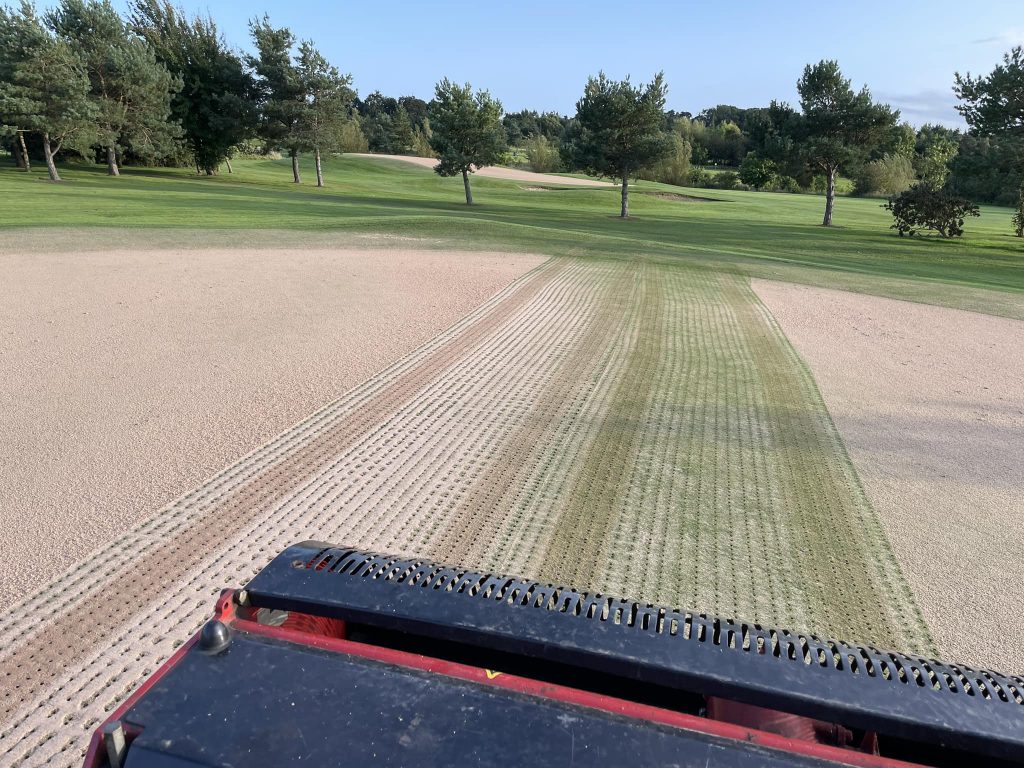
During the work, we tined the greens twice, using different tine sizes and working at different depths. A good amount of heave was applied during the process to help relieve compaction beneath the immediate playing surface. This is particularly important going into the winter months, as reducing compaction improves soil structure and creates more space within the profile for oxygen, water movement and healthy root development.
We also applied a further 50 tonnes of sand across the greens. Working this material into the tine holes has created millions of small channels through the upper profile, improving the movement of air, water and nutrients while helping the surfaces drain more efficiently during wetter periods.
The aim of this work is not simply short-term recovery. It is about continuing to improve the underlying growing environment and building healthier, firmer and more resilient putting surfaces throughout the year. I’m hopeful members will see the benefits of this work over the coming months and, importantly, into next season.
General Course
Going into the weekend of 24th October, the team would normally carry out a full course setup on the Friday in preparation for weekend play. However, with a significant amount of rainfall forecast, I’ve made the decision to give all areas of the course a rest and allow them to benefit from the incoming rain.
It has been a particularly long and dry growing season, and many areas of the course have experienced prolonged moisture stress. At this time of year, our recovery window is becoming increasingly limited as soil temperatures, daylight hours and overall growth rates begin to decline.
Reducing unnecessary machinery and foot traffic during this period will give stressed turf an opportunity to recover while also limiting additional compaction and wear. The forecast rainfall should provide a valuable opportunity to replenish soil moisture levels across the course following such a dry season.
As we move further into autumn, our maintenance decisions will increasingly be dictated by ground and weather conditions rather than the calendar. Protecting turf and soil structure now is important to how successfully the course comes through the winter.
Overseeding
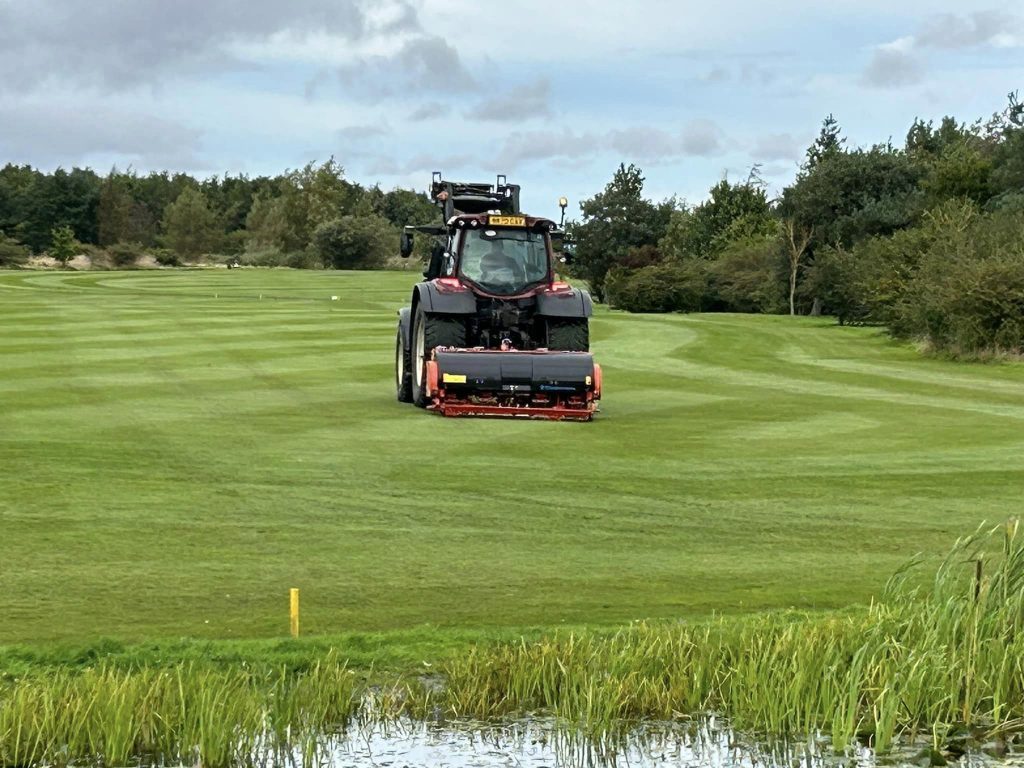
Over recent weeks, we have drilled hundreds of kilograms of grass seed into selected areas across the course as part of our ongoing overseeding programme.
Overseeding allows us to introduce desirable grass species into weaker and thinner areas, helping to improve turf density, presentation, playability and overall resilience. Establishing stronger populations of desirable grasses also helps surfaces cope better with wear, drought and disease pressure over the longer term.
The weekend of the 24th should provide us with a good opportunity to rest these newly seeded areas. With moisture arriving and temperatures remaining relatively mild for the time of year, we are hopeful that conditions will encourage germination and early establishment before temperatures fall further.
Where possible, minimising traffic across these areas will give the young seedlings the best opportunity to establish.
Bunker Refurbishment
The team have begun bunker renovation work around the chipping facility.
As well as improving the condition and presentation of the practice area, this project provides an excellent learning opportunity for three members of the team who are currently embarking on their Level 2 agronomy qualification.
They will be involved throughout the renovation process, gaining practical experience in areas such as bunker construction, drainage, shaping, sand installation and finishing. Projects like this are an important part of developing the team’s knowledge and practical skills alongside their formal education.
We look forward to seeing both the progress and the finished results over the coming weeks.
Cut & Collect
Members will have noticed that a number of areas of longer grass have recently been cut down and the material removed from the course.
This forms part of our ongoing rough management programme, with the long-term objective of producing finer, more playable areas of rough across the golf course.
Importantly, the process involves both cutting and collecting the material. Continually removing the grass clippings gradually reduces the amount of organic material and available nutrients being returned to these areas. Over time, this helps create conditions that favour finer, less vigorous grasses rather than dense, lush growth.
The aim is not necessarily to eliminate the rough, but to develop areas that retain their definition and ecological value while becoming thinner and more playable. Ideally, a ball entering these areas should remain findable and playable without removing the strategic challenge that good rough provides.
These areas will now be left to naturally regenerate and grow back ahead of next season.
Woodland Management
As we move towards winter, woodland management will become one of the team’s main areas of focus. We will be carrying out selective thinning, clearance and general woodland management across the course on a regular basis.
There are several reasons behind this work. From an agronomic perspective, managing tree populations can significantly improve the growing environment surrounding our playing surfaces. Excessive tree cover can restrict sunlight and airflow while creating additional competition for moisture and nutrients. Shaded, damp environments can also leave turf weaker and more susceptible to disease and wear.
Selective thinning allows more sunlight and air movement into key areas, helping surfaces dry more effectively and creating a healthier environment for turf growth.
Our woodland work is also about creating a better overall environment across the golf course. Where appropriate, we will look to improve woodland structure and encourage a more diverse natural habitat rather than simply removing trees.
Playability will remain an important consideration. Managing overgrown areas and selected trees will help maintain sightlines, improve access and ensure the intended flow of play around the golf course is maintained.
As always, much of our winter work is carried out with the following season in mind. The decisions and maintenance we undertake over the coming months will play an important role in the health, presentation and performance of the course next year.
Thank you for your continued support.
John & Team.
Best regards,
Graham & Team
l
So lots to digest there, enjoy the rest of the week.